


SAAPRI’s Access to Justice program addresses systemic barriers affecting South Asian Americans, with a focus on immigration policy and anti-hate initiatives. Through community-driven research, advocacy, and coalition-building, the program works to protect immigrant rights, combat hate crimes, and advance policies that ensure equity and safety. By tackling language, cultural, and legal obstacles, the Access to Justice program informs South Asian communities to navigate complex systems and advocate for meaningful change.
Our Work Under Access to Justice
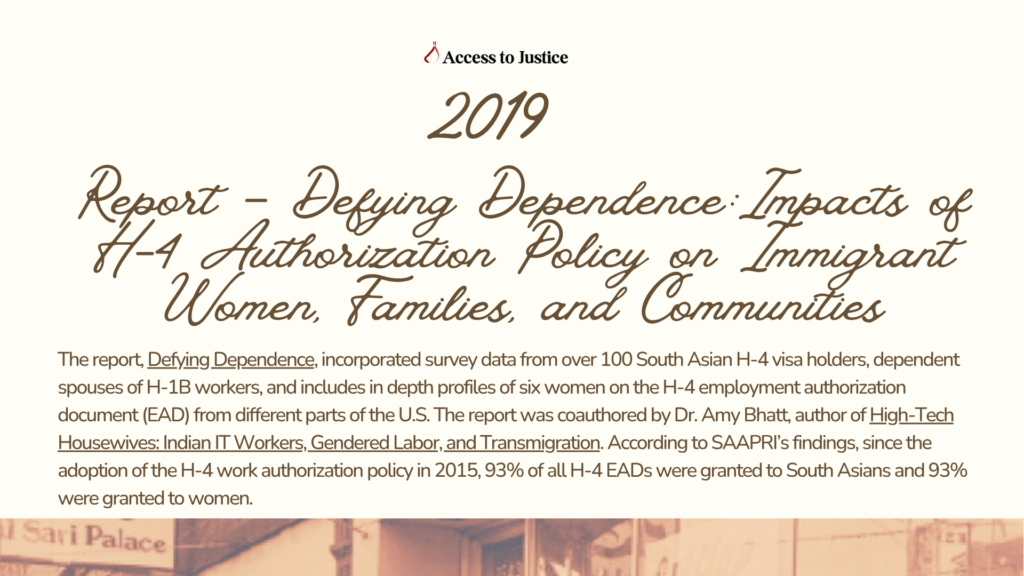
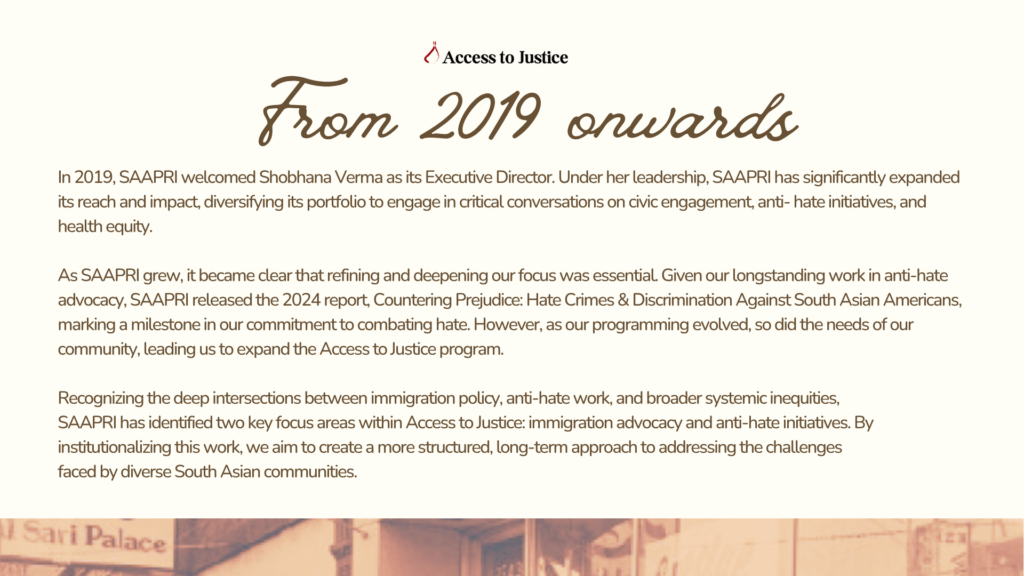
SAAPRI’s Access to Justice program focuses on three interconnected areas of work that address structural barriers affecting South Asian Americans: immigration systems, bias and hate incidents, and the preservation of community histories. Through research, policy engagement, and community education, these initiatives aim to ensure that South Asian communities have the information, representation, and protections needed to navigate complex systems and advocate for their rights.
Immigration Policy & Community Education
Immigration systems shape the experiences of many South Asian Americans, yet the policies governing visas, residency, and citizenship are often complex and difficult to navigate. Through research, public education, and policy analysis, SAAPRI works to make immigration systems more transparent and accessible for South Asian communities.
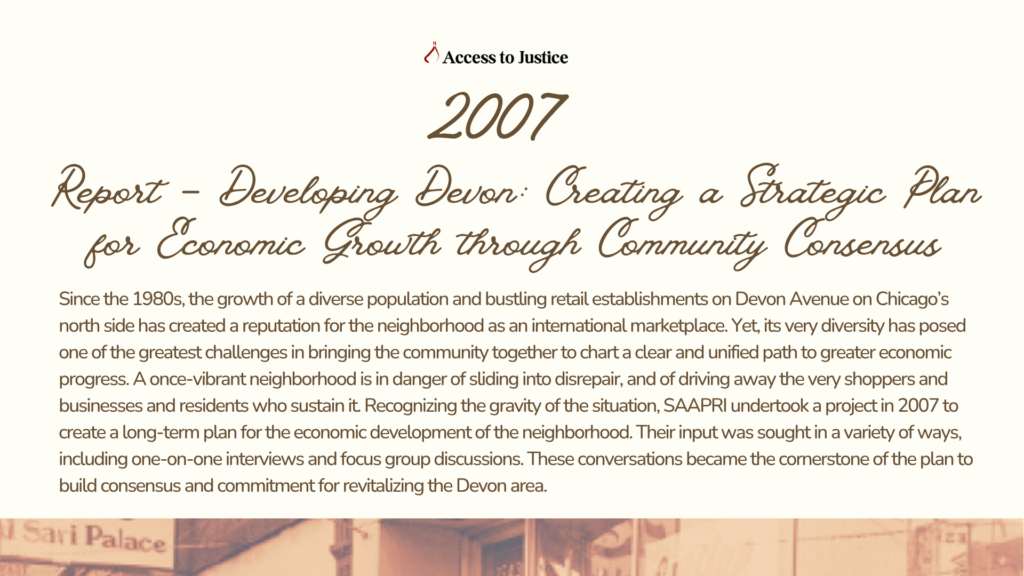
Our immigration work examines how federal immigration policies affect South Asians in America across different pathways, including students, skilled workers, permanent residents, and naturalized citizens. By translating complex policy developments into accessible information and highlighting community-specific data, SAAPRI aims to strengthen policy literacy and support informed advocacy.
This work also identifies structural barriers within immigration systems, including policy changes, administrative delays, and limited access to reliable information. By documenting these challenges and sharing them through research and public education initiatives, SAAPRI contributes to broader conversations on immigration reform and community empowerment.
Against Hate: Research & Policy Advocacy
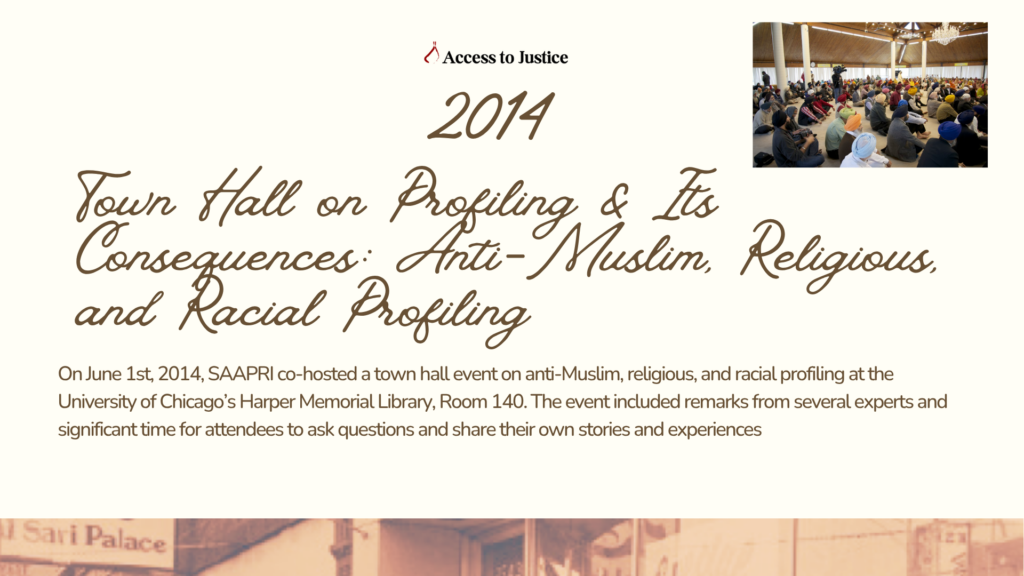
Since its founding, SAAPRI has played a leading role in addressing discrimination and bias affecting South Asian Americans. Hate incidents targeting South Asians often involve religious discrimination, ethnic conflation, and xenophobia, particularly toward Sikh, Muslim, and Hindu communities.
Through its Against Hate initiative, SAAPRI conducts research, policy advocacy, and coalition-building to better understand and respond to hate crimes and bias incidents affecting South Asian Americans.
A major challenge in addressing hate crimes is the lack of reliable data and underreporting. Language barriers, limited awareness of reporting mechanisms, and mistrust of institutions often prevent victims from reporting incidents. SAAPRI’s research seeks to better document these patterns and advocate for stronger systems of reporting, prevention, and community support.
TEAACH & Oral History Project
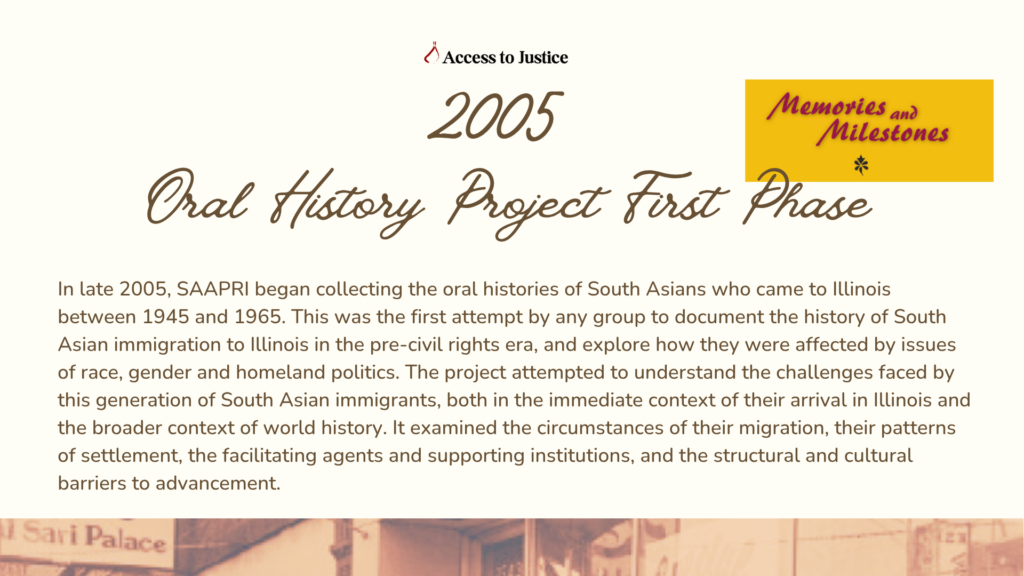
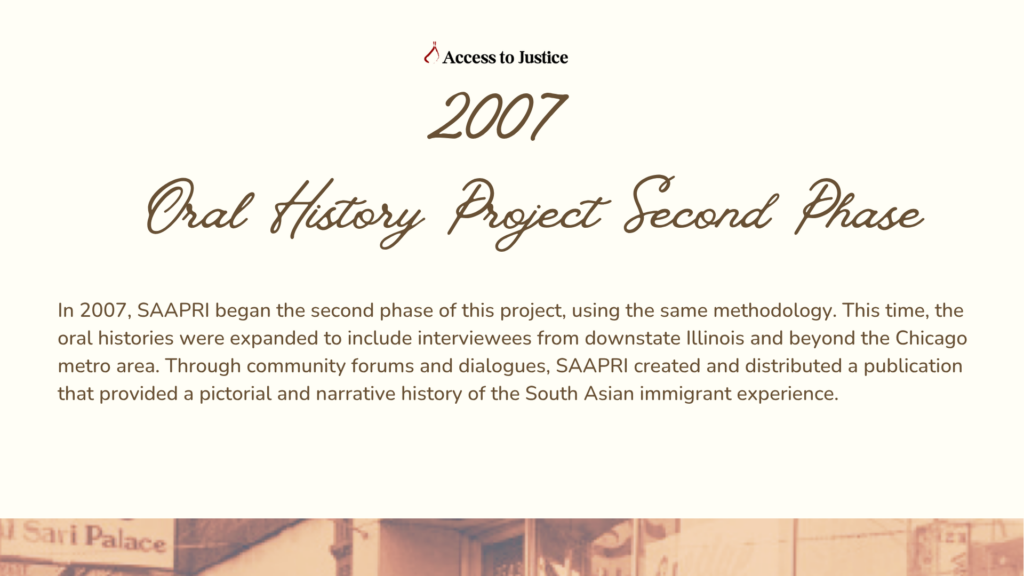
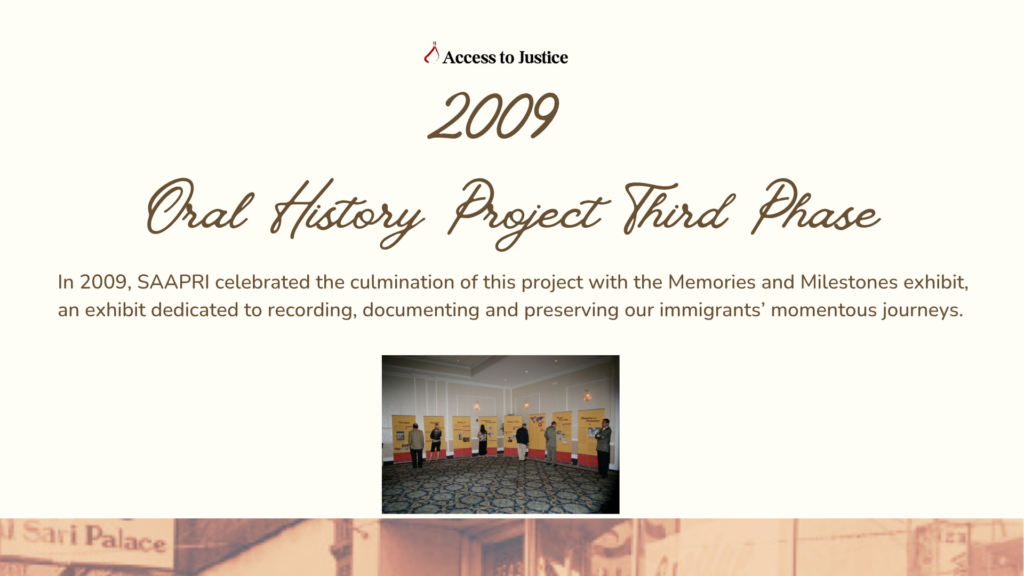
Access to justice also requires recognizing and preserving the histories of communities that have often been overlooked in traditional narratives. SAAPRI’s Oral History initiative works to document the stories, migration journeys, and lived experiences of South Asian Americans across generations. By collecting and preserving these narratives, the project ensures that the voices and contributions of South Asian communities are recorded and accessible for future generations.
This work is closely connected to the passage of Illinois’ Teaching Equitable Asian American Community History (TEAACH) Act, which requires public schools in Illinois to include Asian American history in their curriculum. SAAPRI was among the community organizations that supported advocacy efforts to advance this legislation, recognizing the importance of ensuring that Asian American histories are formally taught in classrooms.
Preserving community histories and integrating them into education plays an important role in combating prejudice and discrimination. When students learn about the experiences, contributions, and struggles of Asian American communities, including South Asian Americans, it helps challenge stereotypes, address misinformation, and foster greater understanding across communities.
Through both the Oral History project and support for initiatives like the TEAACH Act, SAAPRI works to ensure that South Asian American histories are documented, shared, and taught, strengthening community visibility while helping build a more informed and inclusive society.
FEATURED RESEARCH
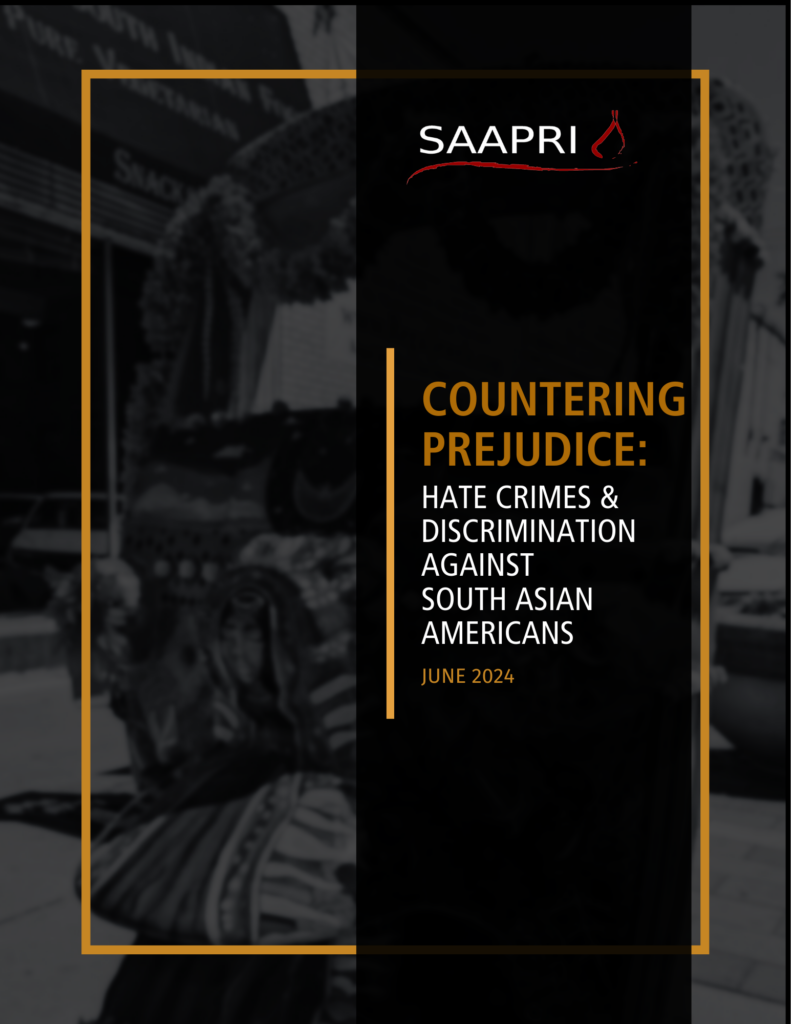
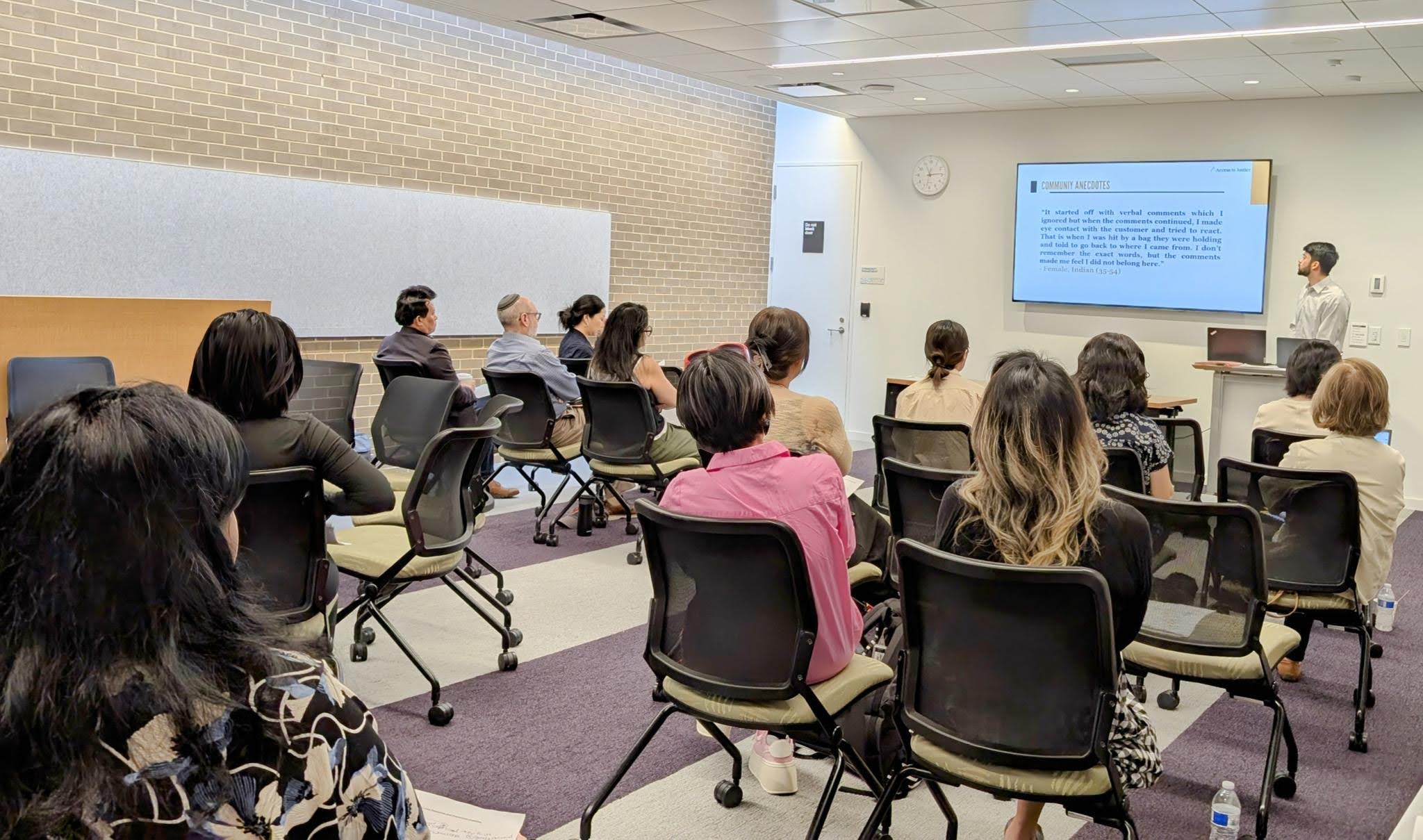
In 2024, SAAPRI published Countering Prejudice: Hate Crimes & Discrimination Against South Asian Americans, a report based on 416 survey responses, which examines hate crimes and discrimination against South Asians in Chicago, exploring reasons behind underreporting and offering recommendations to improve reporting practices.
POLICY UPDATES
Our Policy Updates provide timely analysis of policy developments affecting South Asian communities. Subscribe to our newsletter to receive the latest insights straight to your inbox.
GET INVOLVED
SAAPRI’s Access to Justice work depends on community participation. There are many ways to support these efforts:
- Share your immigration story with us by taking a short survey. Your responses will guide our efforts to advocate for policies and resources that better serve our community. Click here to take the survey.
- Report bias incidents and help improve community data. If you have experienced a hate crime or bias-related incident, we encourage you to complete this form. The information you share helps us better understand what our community is experiencing and strengthens our ability to advocate for policies and resources that improve protection and support for South Asian Americans.
- Participate in community education events and workshops. To know what events are coming up, sign up for our newsletter.
Help Us Share Know Your Rights Resources
Donations support the printing and distribution of Know Your Rights cards that provide South Asian community members with critical information about their rights, reporting options, and available support services.
With permission from the Immigrant Legal Resource Center (ILRC), SAAPRI has adapted their nationally recognized Know Your Rights Red Cards by translating them into 10 South Asian languages, including Bangla, Gujarati, Hindi, Malayalam, Marathi, Nepali, Punjabi, Tamil, Telugu, Urdu.
All people in the United States, regardless of immigration status, have certain rights and protections under the U.S. Constitution. The red cards give examples of how people can exercise these rights. However, they do not provide individualized legal advice. Community members are encouraged to check in with a trusted legal service provider for questions about their situation.
These wallet-sized cards provide critical guidance for what to do when approached by immigration or law enforcement officers. One side is written in the community member’s native language while the other side remains in English which is to be handed to officers in real-time situations.